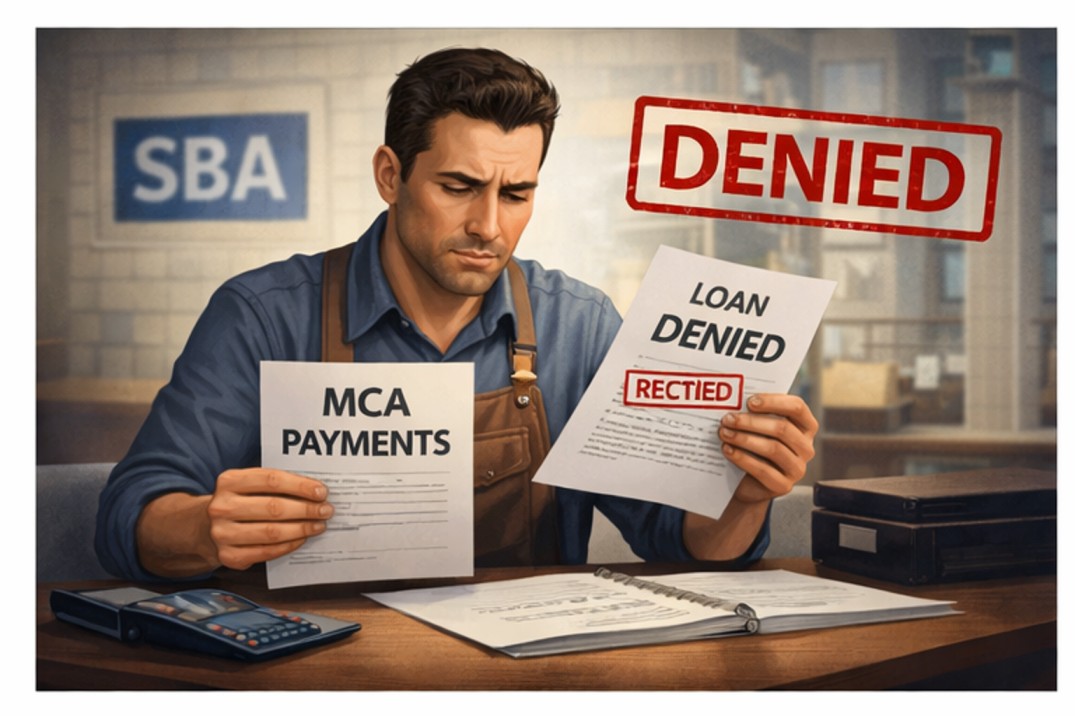

A closer look at how financial structure, UCC filings, and recent SBA policy updates may influence loan approval
For many business owners, traditional financing such as bank loans or SBA backed programs appears to be an attractive option.
Lower interest rates, longer repayment terms, and structured payments are commonly associated with these solutions.
However, qualifying for this type of financing can be more complex than expected.
Even businesses generating steady revenue may not meet the requirements for approval.
The information below is intended to provide general insight into factors that lenders may consider during the evaluation process.
Banks Focus on Risk Assessment
Banks are designed to lend conservatively, with a focus on managing risk and protecting capital.
According to the Federal Reserve Small Business Credit Survey, some small businesses are denied financing or receive less funding than requested.
Lenders may evaluate applications based on factors such as cash flow consistency, financial history, and overall risk profile.
If certain areas do not align with a lender’s criteria, approval may not be granted.
Financial Metrics May Influence Decisions
One factor lenders often review is whether a business can manage its existing and proposed obligations.
This is commonly assessed using a financial metric referred to as Debt Service Coverage Ratio.
Some lenders look for a ratio near or above 1.25, although requirements can vary.
Additional information can be found through the U.S. Small Business Administration.
If a business does not meet a lender’s internal benchmarks, approval may be less likely.
Credit History May Be Considered
Both personal and business credit may be reviewed as part of the evaluation process.
Lenders may consider credit scores, payment history, and recent delinquencies.
Information from Experian discusses how credit performance can influence lending decisions.
Individual lender requirements may vary.
Existing Obligations May Affect Eligibility
Lenders may also consider a business’s current financial obligations when evaluating an application.
Higher levels of existing debt may affect borrowing capacity and risk assessment.
This does not necessarily reflect the overall strength of the business, but rather how the financial profile is viewed from a lending perspective.
General information on this topic can be found at Investopedia.

Understanding UCC Filings
In addition to financial performance, lenders may review public records related to a business.
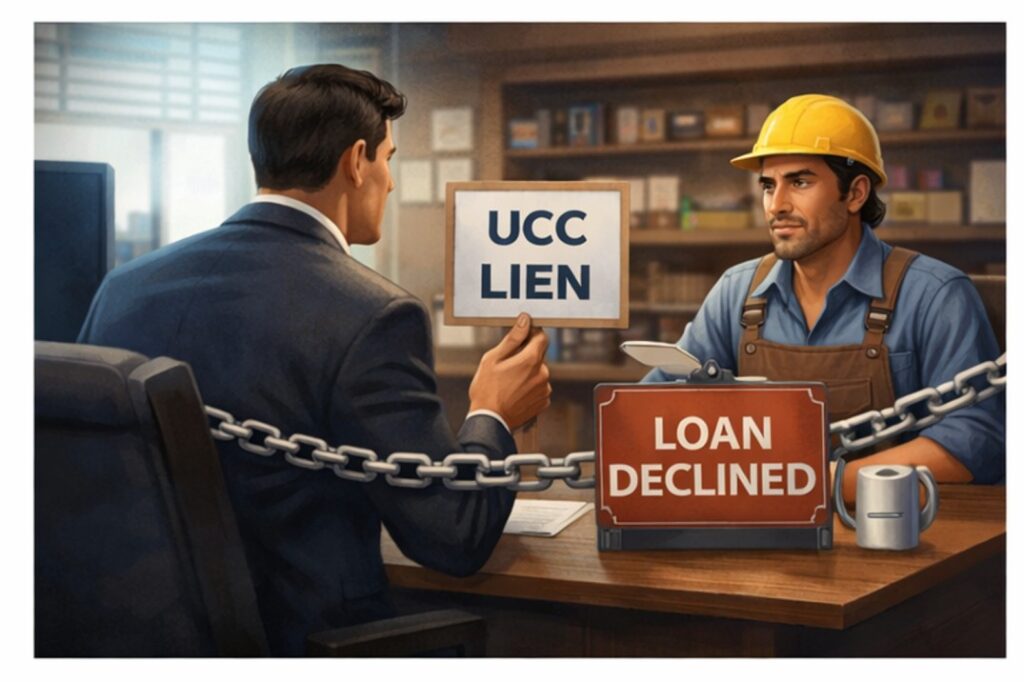
A UCC-1 financing statement is a filing that may be used by a creditor to indicate a security interest in certain business assets.
These filings are made under the framework of the Uniform Commercial Code.
A UCC filing is a standard practice in many forms of secured financing and does not imply wrongdoing.
However, it may indicate that a creditor has a claim or interest in certain assets.
Because these filings are publicly available, they may be reviewed by other lenders as part of their evaluation process.
Depending on the lender and circumstances, this may:
• Affect how available collateral is viewed
• Require additional review
• Influence overall risk assessment
Outcomes may vary based on the lender and the specific details of the business.
Documentation Requirements
Traditional financing often requires documentation such as tax returns, financial statements, and banking records.
Guidance on SBA loan applications can be found here.
The level of documentation required may vary depending on the lender and loan type.
Timing Considerations
Approval timelines for traditional financing can vary.
In some cases, the process may take several weeks or longer depending on the lender, documentation, and review process.
SBA Policy Considerations
Some business owners consider refinancing existing obligations through SBA financing.
However, guidelines may change over time.
As of June 1, 2025, certain SBA guidelines indicate that loan proceeds may not be used to refinance specific types of financing, including certain merchant cash advance or factoring arrangements.
More information can be reviewed here.
Business owners should review current SBA guidance or consult appropriate professionals when evaluating eligibility.
Not All Businesses Meet Lending Criteria
Each lender has its own criteria and underwriting standards.
Businesses that do not meet certain requirements may not qualify at a given time, even if they are operational and generating revenue.
Understanding Financial Positioning
In many cases, lending decisions are based on a combination of financial performance, existing obligations, documentation, and overall risk assessment.
Cash flow, structure, and presentation all play a role in how a business is evaluated.
Understanding how these factors are viewed can help business owners make more informed decisions.
Common Expectations Around Future Financing
In conversations with business owners, it is common to hear that they are planning to resolve existing obligations through a future bank or conventional loan.
In many cases, this expectation is based on the belief that once the business stabilizes, traditional financing will become available and can be used to address current obligations.
While this may be possible in certain situations, it is not always the outcome.
Lending decisions are based on a combination of factors, including financial structure, existing obligations, and overall risk assessment at the time of application.
As a result, some business owners may delay taking action while waiting for a financing solution that may not materialize as expected.
Over time, this can reduce flexibility and limit available options.
In certain cases, business owners may need to explore more significant alternatives depending on their individual circumstances and guidance from qualified professionals.
The Importance of Clear and Timely Information
Because each situation is different, access to accurate and timely information is important when evaluating financial options.
Decisions made based on assumptions or incomplete information can lead to delays or outcomes that may not align with a business owner’s goals.
Having a clear understanding of how lenders may evaluate a business today, rather than relying on future expectations, can support more practical and informed decision making.
In many cases, the sooner a business owner understands their current position, the more options may be available.

About Business Debt Consultants
Business Debt Consultants is a firm that provides information and support to business owners navigating financial challenges.
The team has over a century of combined experience in the financial services industry.
The firm’s approach is to lead with value, clarity, and accurate information so business owners can better understand their financial position and available options.
Whether a business chooses to move forward with any particular solution or not, the goal is that each business owner leaves with a clearer understanding of their situation.
More information can be found at Bizdebtco.
Important Notice
This content is provided for informational purposes only and should not be considered legal, financial, or tax advice. Individual circumstances vary, and business owners may wish to consult with licensed professionals regarding their specific situation.